Classification Models - Decision Tree
Description
A Decision Tree is a widely used machine learning algorithm for solving classification problems. It creates a model that predicts the value of a target variable based on input features.
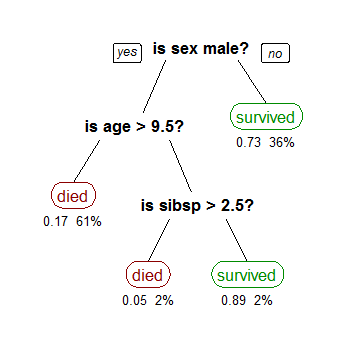
The tree consists of internal nodes that represent features, branches that represent decision rules, and leaf nodes that represent the outcome or prediction. The algorithm builds the tree by recursively partitioning the data based on the best feature at each node.
This process of partitioning continues until a stopping criterion is met, such as a maximum tree depth or a minimum number of samples per leaf. Decision Trees are appealing because they are easy to interpret and visualize, offering insights into the decision-making process.

Decision Trees can handle both categorical and numerical data, making them versatile for various classification tasks. They can also handle missing values and outlier detection. However, Decision Trees are prone to overfitting, where the model becomes too specific to the training data and performs poorly on unseen data.
To address this issue, techniques like pruning, ensemble methods, and random forests are commonly used with Decision Trees. These methods improve generalization and help avoid overfitting, enhancing the accuracy and robustness of the models.
History
Decision trees have a rich history in machine learning classification models. They were introduced in the 1960s as a visual representation of decision-making processes. The development of algorithms like ID3 and C4.5 in the 1980s and 1990s brought popularity to decision tree learning. These algorithms enabled automatic tree construction from training data. Over time, variations such as Random Forests and Gradient Boosting have been developed. Decision trees are widely used due to their interpretability, simplicity, and feature importance evaluation. They remain a fundamental tool in machine learning for classification, regression, and ensemble learning tasks.Use Cases
- Fraud detection: Decision trees can be used to build models that detect fraudulent activities, such as credit card fraud. By examining various features and patterns in customer transactions, the algorithm can classify transactions as either fraudulent or legitimate.
- Medical diagnosis: Decision trees can assist doctors in diagnosing diseases based on patient symptoms, medical history, and test results. By inputting relevant information, the algorithm can provide predictions and classifications for different potential illnesses.
- Spam filtering: Decision trees can be employed to classify emails as either spam or non-spam. The algorithm can analyze various characteristics of an email like subject line, sender, and message content to differentiate between genuine and spam emails.
- Customer churn prediction: Decision trees can help businesses predict customer churn by analyzing customer behavior and engagement data. By examining factors such as customer demographics, purchase history, and interactions, the algorithm can identify individuals at risk of canceling their subscription or discontinuing a service.
- Sentiment analysis: Decision trees can be used to determine the sentiment of textual data, such as customer reviews or social media comments. By analyzing the words and phrases used, the algorithm can categorize the sentiment as positive, negative, or neutral.
- Loan default prediction: Decision trees can assist financial institutions in predicting the likelihood of loan defaults by examining various factors, including credit history, income, and employment status. This helps lenders make informed decisions when approving or denying loan applications.
- Image classification: Decision trees can be utilized for image classification tasks, such as identifying objects or recognizing patterns within images. By analyzing different image features, the algorithm can classify images into various predefined categories.
- Recommendation systems: Decision trees can help build recommendation systems that suggest personalized recommendations to users based on their preferences and past behaviors. By considering various factors like user ratings, browsing history, and item characteristics, the algorithm can recommend relevant products or content.
- Weather prediction: Decision trees can be employed to predict various weather conditions by analyzing historical weather data, atmospheric pressure, temperature, humidity, and other relevant variables. This allows meteorologists to forecast weather patterns and make predictions.
- Stock market prediction: Decision trees can assist in predicting stock market trends by analyzing historical stock data, news sentiment, and other financial indicators. The algorithm can help investors make informed decisions based on the predictions and classifications provided.
Pros
- Interpretability: Decision trees are simple and intuitive to understand. The decision-making process is easily interpretable as it involves a series of if-else statements, making it suitable for explaining how the classification is performed.
- Ability to handle both numeric and categorical data: Decision trees can handle both numeric and categorical input features, which makes them versatile and applicable to various types of datasets.
- Non-linear relationships: Decision trees are capable of capturing non-linear relationships between the input features and the target variable. They can automatically discover complex patterns and interactions within the data.
- Handling missing values and outliers: Decision trees can handle missing values by considering surrogate splits, allowing them to make predictions even when data is incomplete. Moreover, decision trees are robust to outliers as they partition the feature space into smaller regions.
- Feature importance: Decision trees provide a measure of feature importance, indicating the relevance of each feature in the classification process. This information is valuable for feature selection and can aid in understanding the underlying data characteristics.
Cons
- Overfitting: Decision trees tend to create complex models that can overfit the training data, leading to poor generalization and decreased accuracy on unseen data.
- Instability: Small changes in the training data can significantly affect the resulting decision tree, making it an unstable model.
- High variance: Decision trees can be prone to high variance, meaning that slight variations in the training data can result in significantly different trees.
- Difficulty handling continuous variables: Decision trees may struggle to effectively handle continuous variables and can only split them at specific points, potentially losing information.
- Bias towards dominant classes: Decision trees have a bias towards features with more levels or dominant classes, which can lead to a skewed representation of the data.
Hyper parameters
- Criterion: The function used to measure the quality of a split.
- Max Depth: The maximum depth of the decision tree.
- Min Samples Split: The minimum number of samples required to split an internal node.
- Min Samples Leaf: The minimum number of samples required to be at a leaf node.
- Max Features: The number of features to consider when looking for the best split.
- Class Weight: Weights associated with classes in the target variable.
- Min Impurity Decrease: A node will be split if this split induces a decrease of the impurity greater than or equal to the given value.
- Min Weight Fraction Leaf: The minimum weighted fraction of the sum total of weights required to be at a leaf node.
- Presort: Whether to presort the data to speed up the finding of best splits during training.
Pitfalls
- Overfitting: Decision trees tend to overfit the training data, resulting in poor generalization performance on unseen data.
- High variance: Decision trees are sensitive to small variations in the training data, which can lead to different tree structures and potentially different predictions.
- Information gain bias: Decision trees tend to favor attributes with a large number of levels or attributes with high information gain, potentially overlooking other important attributes.
- Missing data handling: Decision trees often struggle with missing data, and certain algorithms may not handle it well.
- Scalability issues: Decision trees can grow exponentially with the number of features and data instances, making them computationally expensive for large datasets.
- Unbalanced class distribution: Decision trees may struggle when dealing with datasets where one class significantly outnumbers the others, leading to biased tree structures.
- Non-linear relationships: Decision trees have a linear decision boundary for each split, making them less effective in capturing complex non-linear relationships.
- Instability: Small changes in the training data can result in different decision trees, limiting the stability and reproducibility of the model.
Algorithm behind the scenes
Sure! The Decision Tree algorithm is a popular machine learning algorithm used for classification tasks. It can be represented as a flowchart-like structure, where each internal node represents a test on an attribute, each branch represents the outcome of the test, and each leaf node represents a class label. The algorithm works by recursively partitioning the training data based on the attribute values, aiming to create homogeneous subsets of the data. The main goal is to separate the instances with different class labels as much as possible. The math details of the Decision Tree algorithm involve calculating the impurity of a set of instances at each node. There are different impurity measures available, such as Gini Index or Cross-Entropy. These measures quantify the impurity or randomness of the class labels within a given set of instances. Let's consider the Gini Index as an example impurity measure. The Gini Index of a node can be calculated using the following formula:
Python Libraries
- scikit-learn: https://scikit-learn.org/stable/modules/generated/sklearn.tree.DecisionTreeClassifier.html
- XGBoost: https://xgboost.readthedocs.io/en/latest/python/python_api.html#module-xgboost.sklearn
- LightGBM: https://lightgbm.readthedocs.io/en/latest/pythonapi/lightgbm.LGBMClassifier.html
- CatBoost: https://catboost.ai/docs/concepts/python-reference_catboostclassifier.html
- TensorFlow: https://www.tensorflow.org/api_docs/python/tf/estimator/BoostedTreesClassifier
- PyTorch: https://pytorch.org/docs/stable/generated/torch.nn.Sequential.html
Code
Sure! Here are some code samples for Decision Tree classification models using popular Python libraries:

1. Scikit-learn library:
```
from sklearn import datasets
from sklearn.model_selection import train_test_split
from sklearn.tree import DecisionTreeClassifier
from sklearn.metrics import accuracy_score

# Load the dataset
iris = datasets.load_iris()
X = iris.data
y = iris.target

# Split the dataset into training and testing sets
X_train, X_test, y_train, y_test = train_test_split(X, y, test_size=0.2, random_state=42)

# Create the Decision Tree classifier
clf = DecisionTreeClassifier()

# Train the classifier
clf.fit(X_train, y_train)

# Make predictions on the test set
y_pred = clf.predict(X_test)

# Measure the accuracy of the model
accuracy = accuracy_score(y_test, y_pred)
print("Accuracy:", accuracy)
```

2. XGBoost library:
```
import xgboost as xgb
from sklearn import datasets
from sklearn.model_selection import train_test_split
from sklearn.metrics import accuracy_score

# Load the dataset
iris = datasets.load_iris()
X = iris.data
y = iris.target

# Split the dataset into training and testing sets
X_train, X_test, y_train, y_test = train_test_split(X, y, test_size=0.2, random_state=42)

# Create the Decision Tree classifier using XGBoost
clf = xgb.XGBClassifier()

# Train the classifier
clf.fit(X_train, y_train)

# Make predictions on the test set
y_pred = clf.predict(X_test)

# Measure the accuracy of the model
accuracy = accuracy_score(y_test, y_pred)
print("Accuracy:", accuracy)
```

3. LightGBM library:
```
import lightgbm as lgb
from sklearn import datasets
from sklearn.model_selection import train_test_split
from sklearn.metrics import accuracy_score

# Load the dataset
iris = datasets.load_iris()
X = iris.data
y = iris.target

# Split the dataset into training and testing sets
X_train, X_test, y_train, y_test = train_test_split(X, y, test_size=0.2, random_state=42)

# Create the Decision Tree classifier using LightGBM
clf = lgb.LGBMClassifier()

# Train the classifier
clf.fit(X_train, y_train)

# Make predictions on the test set
y_pred = clf.predict(X_test)

# Measure the accuracy of the model
accuracy = accuracy_score(y_test, y_pred)
print("Accuracy:", accuracy)
```

Note: Remember to install the required libraries (e.g., scikit-learn, xgboost, lightgbm) before running these code samples.